
Guide
Do I really need a website if I have Instagram?
Solo studios and new practitioners3 min readUpdated September 2026
The short answer
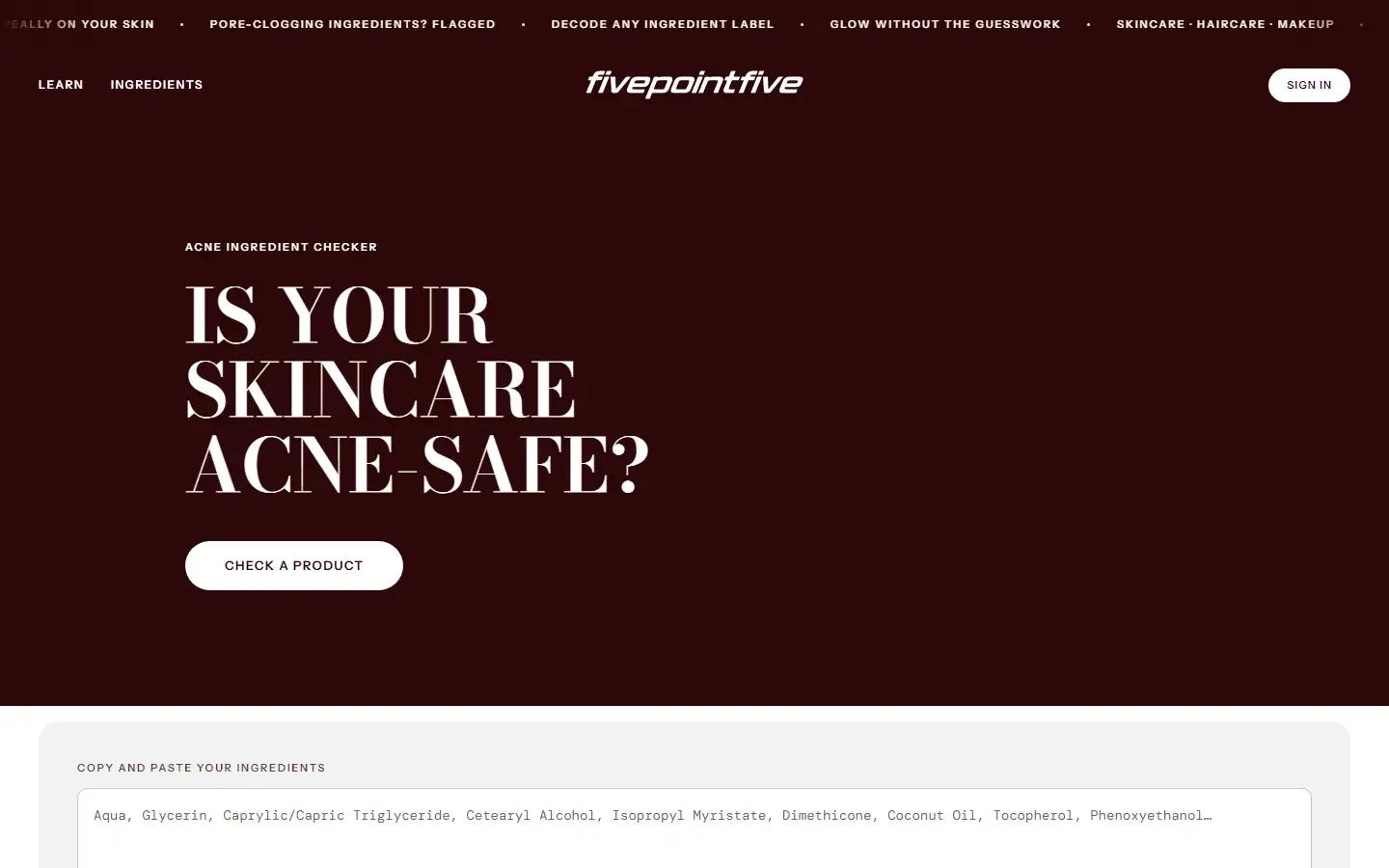
Instagram is where people decide about you, and search is where they find you in the first place. If everyone booking you already knows your name, Instagram is carrying it fine. If you want the person who searched for a treatment and a city at 11pm, a profile can't reach them, because nobody opens Instagram to find a facial nearby.
They do two different jobs
Instagram is a consideration tool, and it’s very good at it. Somebody who’s heard your name or seen a friend’s brows can open your profile and be convinced in a minute or two. Nothing else does that as well, and if your grid is good you should keep doing exactly what you’re doing.
Search is a discovery tool. It reaches the person who hasn’t heard of you and was never going to. They know what they want and roughly where they want it, and they’re typing that into a box.
Where it goes wrong is assuming that because one of those jobs is going well, the other one’s covered too. They don’t overlap at all.
The test
Ask your next ten clients how they found you. If nine say a friend, or your Instagram, or they’ve been coming for years, then Instagram is carrying the business and a website can wait until you’re ready.
If you’d like more clients than your referrals bring in, the question is where the new ones come from, and they won’t arrive through Instagram, because nobody opens Instagram to find a facial near them. They open Google.
What I actually see in the numbers
I have Search Console access for the studios I work with. Taken together, searches with the studio’s name in them are a small share of the times a site gets shown and a far bigger share of the times it gets clicked. Those are people who already knew. The searches for the actual treatments, the ones from strangers, are most of the showing, and they get clicked far less often.
So the demand from strangers is already there and already being shown the site, it’s just mostly not clicking yet. I published the exact split, and how I measured it, on the benchmarks page.
What a website does that a profile can’t
- Rank for the treatment, not the name. A page about dermaplaning can win “dermaplaning near me”. A grid post about dermaplaning can’t.
- Say what you are in a way machines can read. Structured data on a page tells Google, and the assistants people are increasingly asking instead of Google, what you do, where you are, your hours and your prices. A profile can’t be marked up.
- Hold up the map listing. A Google Business Profile with a real website behind it is a stronger listing than one without. The two support each other.
- Cut the taps. Bio, to a link tool, to a booking system is three taps and two chances to lose somebody who had already decided. From a page it can be one.
- Belong to you. An account can be hacked or restricted for reasons nobody will explain to you, and there’s no meaningful appeal and no way to take the audience with you. A domain and the site on it can’t be removed by somebody else’s moderation decision.
When Instagram-only is fine
If you’re fully booked on referrals and the only limit on your business is hours in the day, a website won’t fix anything that’s wrong right now. Build it when you want more new clients, or when you want to charge more and need to look like it.
Even then, I’d claim your Google Business Profile today, since it’s free. That’s the piece that gets you into the map results, and it works whether or not you ever build a site.
The smallest version that’s worth building
If you do build, this is the shape that earns its money for a solo studio, and it isn’t many pages.
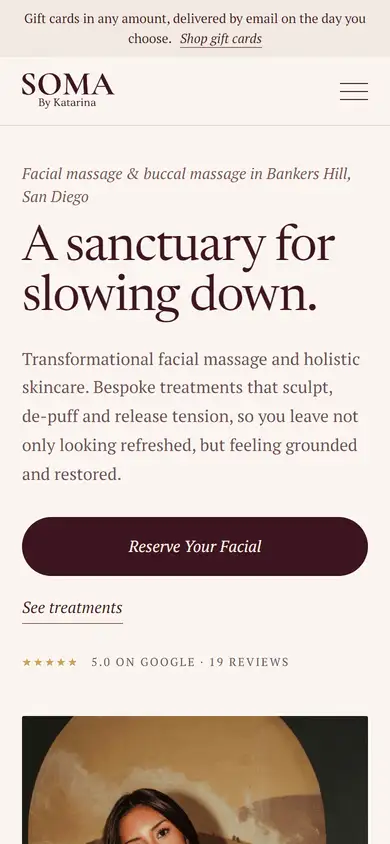
- A home page that says what you do and where, with booking one tap away.
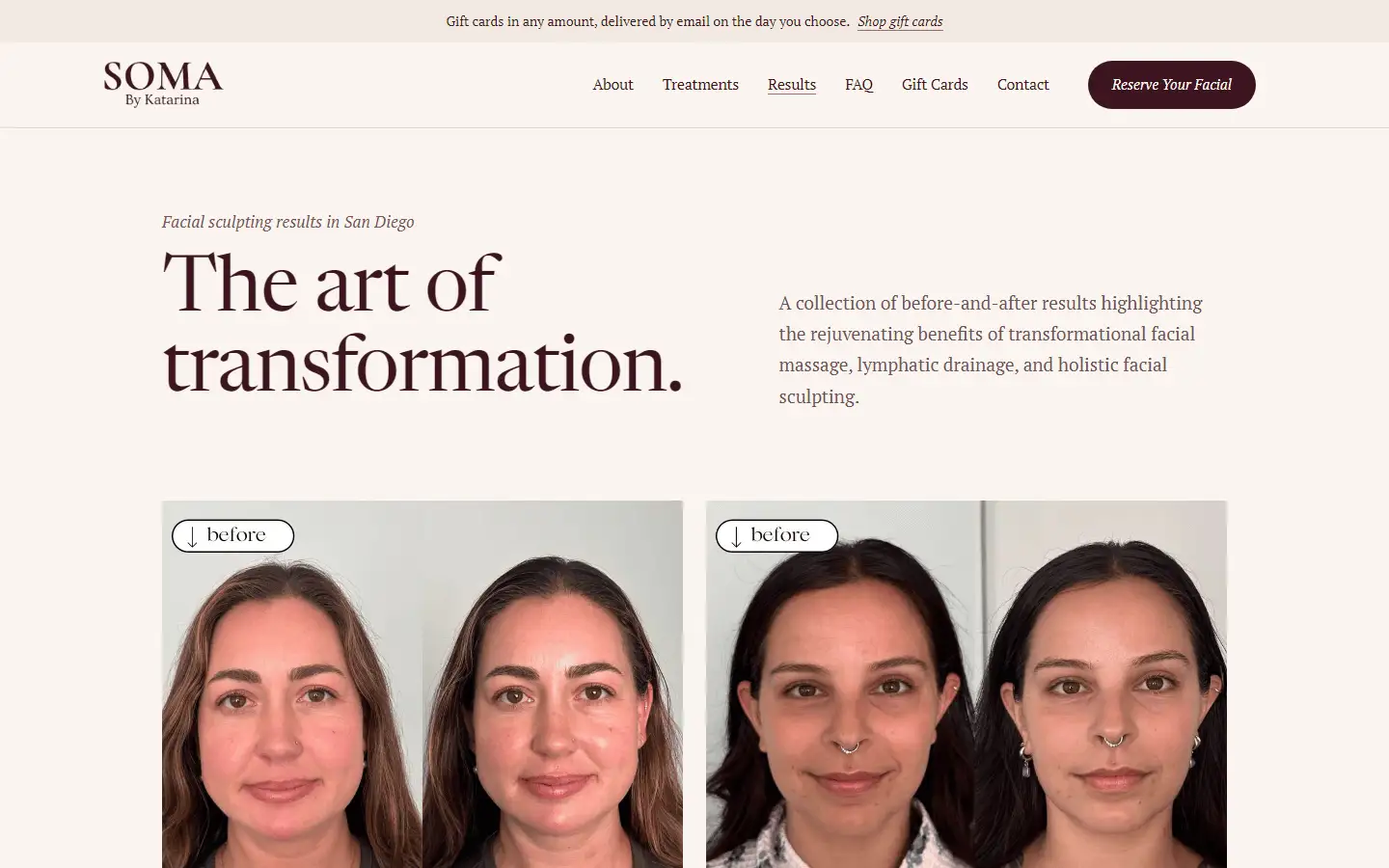
- One page for each treatment you want more of. This is the part that does the discovery work and the part almost everyone skips.
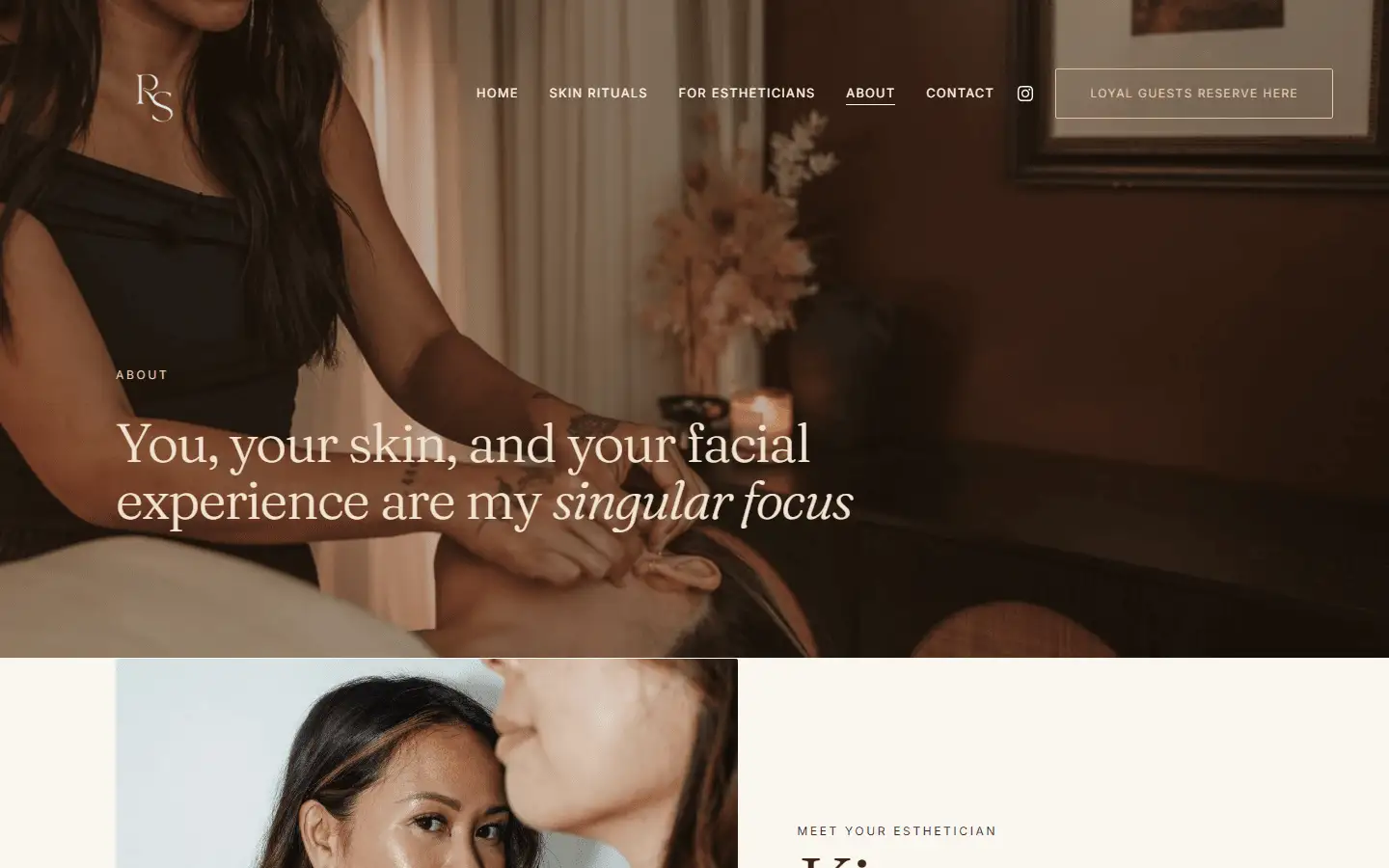
- An about page, because people booking a facial or a massage want to know who they’ll be seeing.
- Real contact details, written identically to your Google profile.
That’s four to seven pages, and it’s the shape of nearly every build I do. It’s $1,000 with the search work included, and if you already have a site you like, the search work on the site itself is $350 on its own.
And keep the Instagram, because it’s doing a job the website can’t.
The questions this usually leads to
Short answers, and if yours isn't here, just ask.
Can I rank on Google with just an Instagram profile?
Your profile itself can show up when somebody searches your business name, and a Google Business Profile can get you into the map results without a website at all. What neither can do is compete in the ordinary search results for the treatments you offer, because those are won by pages, and a profile isn't a page. That's the traffic you're missing out on.
What about Linktree instead of a website?
A link tool solves the one-link problem and nothing else. It doesn't rank for anything or tell Google what you do, and it adds a tap between someone deciding to book and actually booking. If it's what you have today it's better than nothing, but it's a workaround.
My bookings all come from referrals. Do I still need one?
Referrals still Google you. Somebody hears your name at a dinner and looks you up on the way home to see whether you look like what their friend described, and a site earns its keep on that visit alone. It just isn't as urgent as it is for a studio that needs new clients.
Will AI assistants recommend my studio if I only have Instagram?
Unlikely. Assistants answer from pages they can read and cite, and a profile behind a login is hard to read and harder to attribute. If someone asks an assistant for a dermaplaning appointment in your city, it's going to name studios whose websites say plainly what they do and where they are.
Beep me
Tell me a bit about your studio and what you'd like to fix. I read every message myself and I'll usually get back to you within a day. No pressure, and if I don't think you need me, I'll say so.