



Guide
How do I get ChatGPT to recommend my studio?
Studio owners who've started seeing clients arrive from AI assistants5 min readUpdated September 2026
The short answer
Make your site something it can read. When someone asks an assistant for a studio nearby, it goes and fetches pages, then names the ones that plainly say what they do, where they are and what it costs. It can't name what it can't fetch, can't parse, or can't tell apart from three other listings of you with different phone numbers.
What’s actually happening when someone asks
There are two different ways your name could come out of an assistant, and only one of them is worth your time.
The first is that the model learned about you during training. You can’t influence that, it’s frozen months before anyone talks to it, and for a studio with a few hundred monthly visitors it almost certainly didn’t happen.
The second is that the assistant went and looked. Ask most of them for a dermaplaning appointment in your city and they’ll run a search, fetch a handful of pages, read them, and answer from what they found, usually with links. That’s the one you can affect, and it’s affected by the same things that have always decided whether a page is useful.
Which is either reassuring or annoying, depending on how much you were hoping for a trick.
The honest limits of what anyone knows here
Nobody outside those companies knows how the shortlist gets picked, the systems change often, and anyone telling you they’ve reverse engineered it is selling something. So I’ll stick to what’s stable: an assistant can only name a business whose page it can fetch, parse, and trust enough to attribute. Everything below is about clearing those three bars. That’s a lower bar than “rank first” and a much lower bar than most studio sites currently clear.
The five things to fix
1. Let the crawlers in
The assistants use named crawlers, and a site can block them without its owner
knowing. Yours probably has a robots.txt file at yourdomain.com/robots.txt.
Open it in a browser. If you see Disallow: / on its own line under names like
GPTBot, OAI-SearchBot, PerplexityBot or ClaudeBot, or under *, that
crawler has been asked to stay out of the whole site.
If you’re on Squarespace, this file is managed for you. The thing to check is the “Block known artificial intelligence crawlers” box under Settings, then Crawlers. Squarespace says it’s unchecked unless you check it. If you’re on another platform, look for a similar setting.
There’s a real argument for blocking them, and I’d rather give it to you than pretend it doesn’t exist: if your site is your product, letting a model absorb it whole is giving away the thing you sell. That’s why publishers block them. A studio is the opposite shape. Your product is a treatment somebody has to sit in a chair for, and being named is pure upside.
2. Say the treatment and the city in words
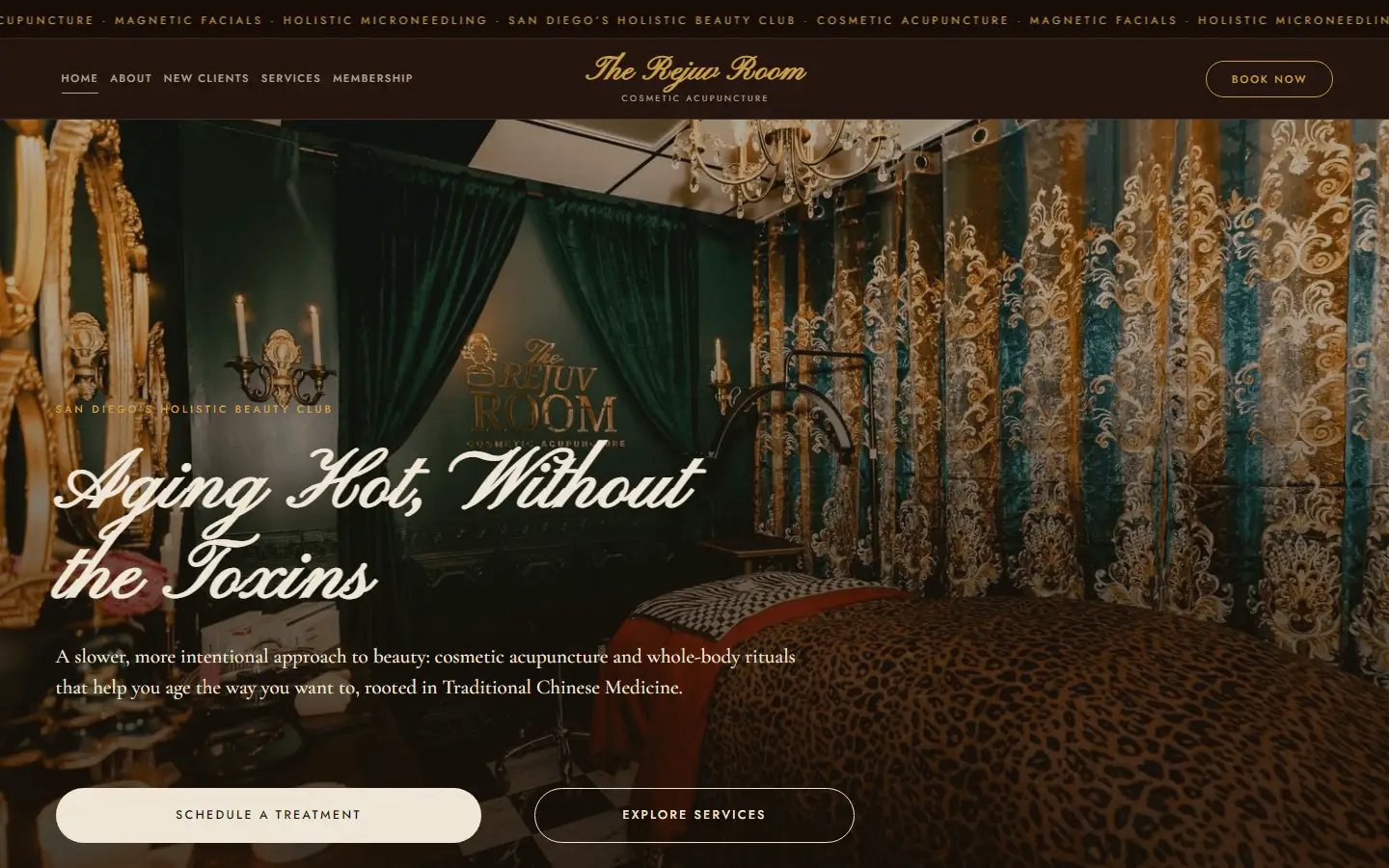
Assistants answer specific questions. “Where can I get a hydrafacial in North Park” only matches a page that contains something close to “hydrafacial” and something close to “North Park”, in text, not baked into an image of your menu.
This is the single most common failure I see. A studio has a gorgeous site with a page called “Services” that lists prices in a designed graphic, and there’s no readable text on the entire page saying what any of the treatments are called. To a crawler that page is blank.
3. Make your details identical everywhere
Your name, address, and phone number should be byte for byte the same on your
site, your Google Business Profile, and every directory that lists you. Not
“basically the same”. The same. Ste 4 on one and Suite #4 on another is
enough to make a machine treat you as two businesses it can’t reconcile, and the
safe move for an assistant is to name the studio it isn’t confused about.
Pick the version on your Google Business Profile and make everything else match that one.
4. Put the answer in the answer’s shape
If a question has an answer, write the question as a heading and put the answer in the paragraph directly under it, in about fifty words, so it makes sense lifted off the page on its own. That’s it. That’s the whole technique, and it’s the same reason FAQ sections do well.
Ask yourself: if somebody copied one paragraph off this page and pasted it as the answer, would it stand up? If it only makes sense after the two paragraphs above it, rewrite it.
5. Add structured data, or have someone add it
This is a block of code in the page’s header that states, in a format machines read directly, that you’re a business of a particular type, at an address, with these hours and these services. It removes the guessing. On Squarespace it goes in Settings, Developer Tools, Code Injection, Header. Google publishes a free Rich Results Test you can paste your URL into to check it.
This one is genuinely fiddly, and it’s the piece most people hire out. It’s also the piece that has the most leverage per hour, because it turns “probably a spa” into “a spa, here, open until 7”.
What doesn’t work
- Stuffing “AI” into your copy. Nothing reads the phrase “AI optimized” and thinks better of you.
- A page listing every neighborhood in the county. That’s an old trick, it was already worn out for search, and it reads as spam to a model too.
- Buying an “AI visibility” package that won’t tell you what it does. Ask what specifically will change on your site. If the answer is a dashboard rather than a list of pages, keep your money.
The part where I’m honest about the size of this
I’d be overselling if I told you assistants are sending studios a flood of bookings today. Across the studios I have Search Console access for, the searches that arrive still look like ordinary Google searches, and I’d rather tell you that than sell you a panic.
What’s true is that all five items above are things you’d want anyway. Every one of them makes you easier to find on Google, easier to read on a phone, and easier for a human to book. So this isn’t a bet on the future. It’s the same work, with a second reason to do it.
If you’d rather not spend the Saturday on robots.txt and structured data, that
part is the SEO half of what I do. If you’re not sure whether your
site is readable in the first place, run it through the free audit on the home
page, which checks most of this and tells you what it found.
The questions this usually leads to
Same rule as above: short answers, no hedging. If yours isn't here, just ask.
Can I pay to be included in an AI assistant's answers?
Not today, and be careful with anyone selling it. The assistants that cite sources are reading the live web when you ask them a question, so there's no index to buy your way into. If that changes it'll be an ad product with a label on it, the way search ads are labeled.
Does an assistant use my Google Business Profile?
Often, yes, directly or through whatever it's reading that quotes your listing. That's the cheapest thing on this list and it's free. If your profile and your website disagree about your address or your hours, you've given an assistant a reason to skip you and name someone unambiguous instead.
Should I add a page that's written for AI rather than for people?
No. The pages that get quoted are the ones that answer a question clearly, which is the same thing that works on a human reader. A page written to game a model reads as thin to the model too, and you'd be maintaining a second version of your site for an audience of one robot.
I don't have a website. Can an assistant still recommend me?
It can name you if it finds you somewhere it can read, like a directory or a map listing, but you're relying on somebody else's page to describe your business. That page won't mention the treatment you want more of, and it won't say why you rather than the studio two blocks over.
Beep me
Tell me about your studio and what you're trying to fix. I read every message myself and usually reply within a day.